The Problem & The Goal
The Problem
The market for high-performance gaming gear is fragmented and often overwhelming. Dedicated gamers struggle to find a single, trustworthy online store that offers both a curated selection of elite peripherals and the detailed, reliable information needed to make confident purchasing decisions.
The Goal
To design a specialized, responsive e-commerce platform that centralizes high-performance gaming gear and empowers gamers by providing a seamless, informative, and trustworthy shopping experience, from discovery to checkout.
Understanding the User
I conducted user interviews and surveys to understand the shopping habits of dedicated gamers. The research clarified that while price is a factor, users overwhelmingly prioritize trust, detailed specifications, a visually engaging and intuitive interface, and authentic reviews from other gamers.
Fragmented Information
Gamers face a fragmented shopping experience, forcing them to jump between manufacturer sites, forums, and generic retailers to find reliable information.
Lack of Relevant Reviews
Reviews on major retail sites are often from casual users, offering little insight into how equipment performs in a competitive gaming context.
Uninspiring Experience
The sterile design of standard e-commerce websites feels disconnected from the passion and high-tech aesthetic of the gaming community.
The User Persona

Leo "The Perfectionist" Carter
"My gear needs to be as reliable and performant as my code."
- Problem Statement: Leo Carter is a detail-oriented software engineer and competitive gamer who needs a centralized and trustworthy platform to research and purchase elite gaming peripherals because he values making informed decisions based on reliable data and peer reviews, not just marketing hype.
User Journey Map
I created a detailed user journey map to visualize Leo’s entire shopping process, allowing me to pinpoint his specific frustrations and uncover key opportunities to improve the user experience.

Defining the Path
From Wireframes to Final Design
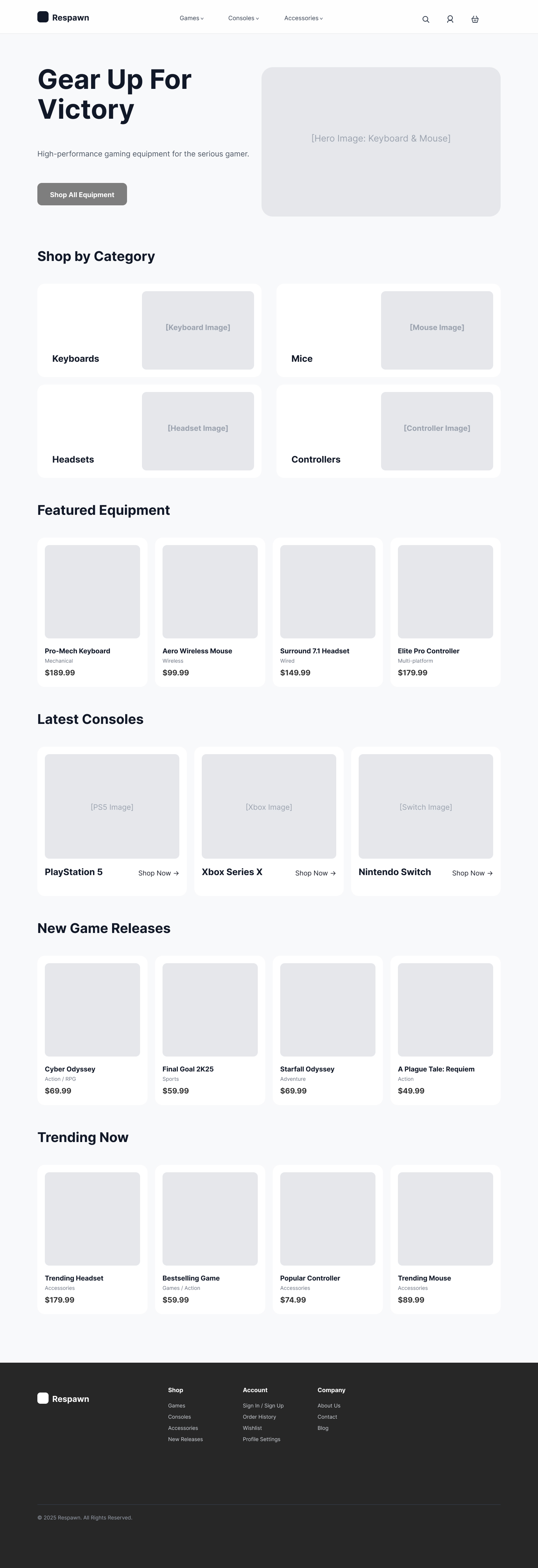
I started with paper sketches, then moved to digital wireframes to create a structure that feels intuitive for gamers. After peer feedback, I simplified the navigation and grouped products more clearly by category to reduce friction.
Digital Wireframe
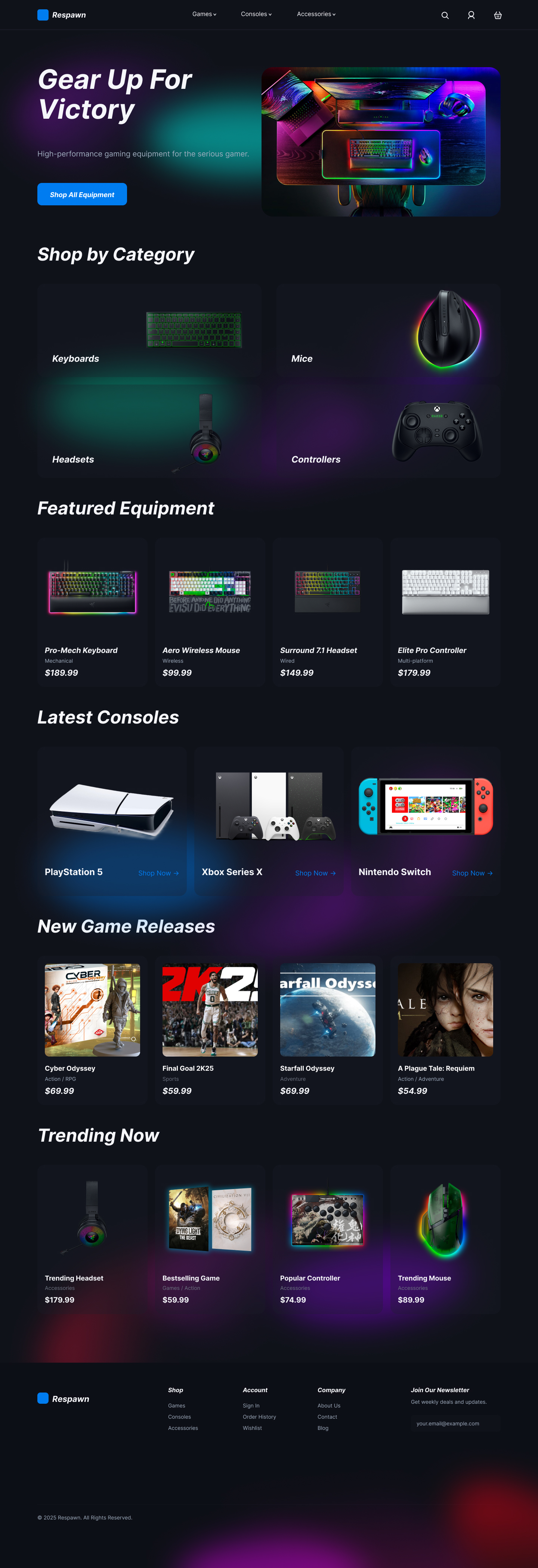
High-Fidelity Mockup
Usability Testing & Iteration
An unmoderated usability study was conducted with 5 remote participants. The key insight was that users expected a faster way to add products to their cart without navigating away from the listings page.
Finding: Hidden "Add to Cart" Action
Participants looked for an "Add to Cart" button on product cards and did not immediately realize that clicking the entire card was the only path forward.
Solution: On-Hover Quick Add
An "Add to Cart" button now appears on hover. This preserves the clean aesthetic while offering the requested functionality for a quick add, directly addressing user feedback.
Before
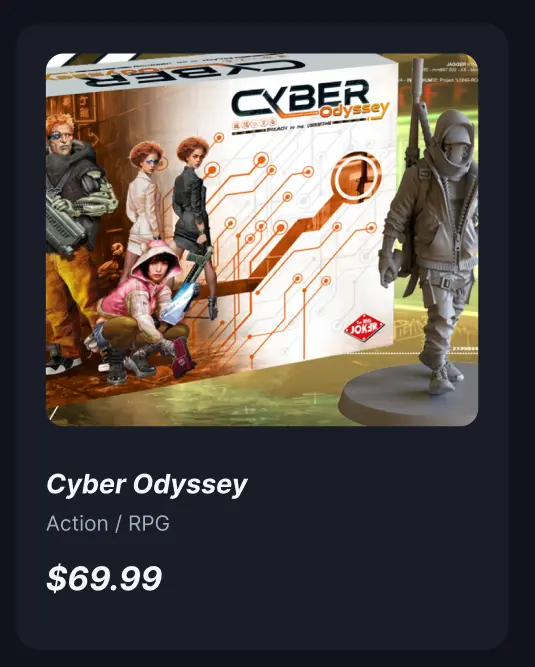
After

The Final Product
The high-fidelity prototype incorporated improvements from the usability study and peer feedback, with a focus on a responsive experience across all devices.
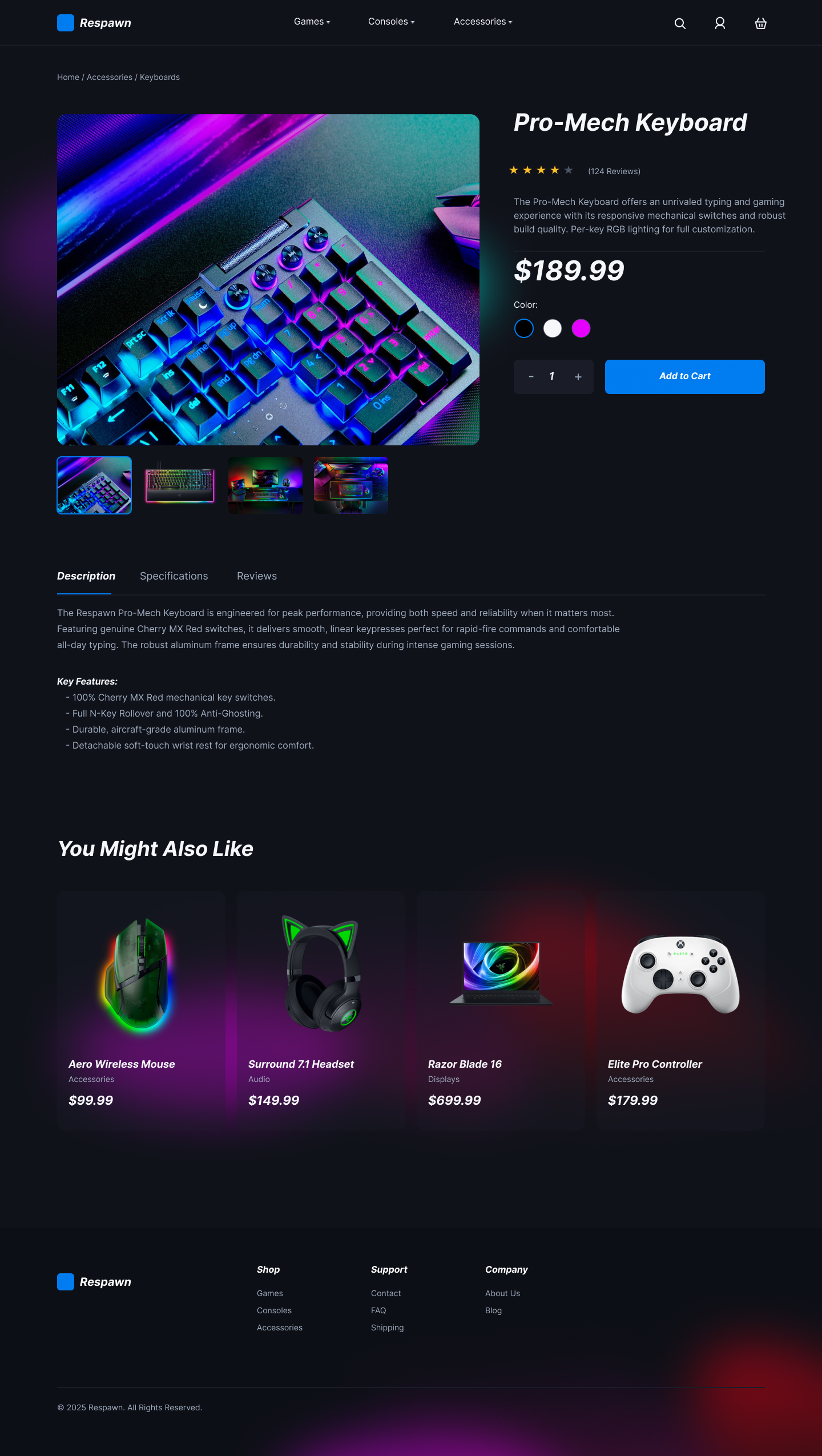
The product page design, available for scrolling in desktop.

The shopping cart page design, available for scrolling in desktop.

The product listing page design, available for scrolling in desktop.
Project Outcomes
The design's success was validated through a usability study, demonstrating significant improvements in user efficiency and satisfaction.
Faster Task Completion
System Usability Score
User Satisfaction Rate
Takeaways
Impact
The final design successfully addresses key user frustrations. The platform now provides a centralized, trustworthy, and visually engaging experience that empowers gamers to make confident purchasing decisions.
What I Learned
Throughout this project, I learned the critical importance of direct user testing. Initial assumptions can be misleading, and the most valuable insights come from observing real user interactions with the product.